Is Your Old Card Collection Actually Worth Anything?
The box turns up in a garage, a closet, or a parent’s house after a move. Somebody saved it carefully, and now it is your problem.
Here is the honest answer before anything else. Most of what is in that box is probably worth very little. A small part of it might be worth real money. The entire job is figuring out which is which without losing a weekend to it.
That last part matters more than people expect, because the question is not really what is this worth. It is how much of my time is this worth. A collection that takes eight hours to research and turns out to be worth sixty dollars was a bad use of a Saturday, and nobody tells you that up front.
So this is in two parts. First, why so much of it is worth so little, which is a genuinely interesting story and not just bad news. Then a process you can actually run: how to triage sports cards, Pokémon, Magic, and comics without looking up a single card until you know which ones are worth looking up.
The Short Answer, and Why It Is Not the Whole Answer
“Worth anything” gets treated as a yes or no question. It is not. There are three different kinds of worth in that box and you need all three to answer it.
Individually notable cards. The ones with enough scarcity and demand that they have their own price. In most old collections this is a handful of items, sometimes none.
Bulk value. The mass of the collection, priced by the thousand rather than by the card. Low per card, but a lot of cards is a lot of cards, and this is a real number rather than zero.
Sentimental value. Not financial, but not nothing either. If the collection was your grandfather’s, that is a legitimate reason to keep it, and no part of this article is telling you to sell.
Most guides collapse these into one answer, which is how people end up believing their collection is either a lottery ticket or trash. It is usually neither. A collection can be worth pennies per card and still be worth selling as a lot, and low per-card value is never a reason to throw anything away.
Why So Much of It Is Worth So Little
Scarcity drives value. That is the whole mechanic, and it explains almost everything about what happened.
From roughly the mid-1980s through the mid-1990s, sports card manufacturers massively increased production. Collectors disagree on the exact boundaries of that period and you will see different year ranges quoted, but the shape is not in dispute. The hobby had gone mainstream, the press ran stories about vintage cards selling for enormous sums, and a generation drew the reasonable conclusion that new cards would do the same. Manufacturers printed to meet the demand. Then they printed more.
The same thing happened to comics on a similar timeline for the same reason. Publishers printed enormous runs of speculator-driven titles, and buyers put them straight into bags and boards because everybody knew that condition mattered.
That last detail is the cruel part. The reason older cards and comics from earlier decades are valuable is not just age. It is that kids played with them, folded them, put them in bike spokes, and threw them out, so almost nothing survived in good condition. The material from the overproduction era was printed in vastly larger quantities and then preserved carefully by millions of people at once. Enormous supply and pristine condition together are the opposite of scarce.
None of which means the box is worthless. Exceptions exist in every era, and finding them is what the rest of this is about.
Step 1: Sort by Era Before You Look Up a Single Card
Do not start by researching cards. Start by making piles.
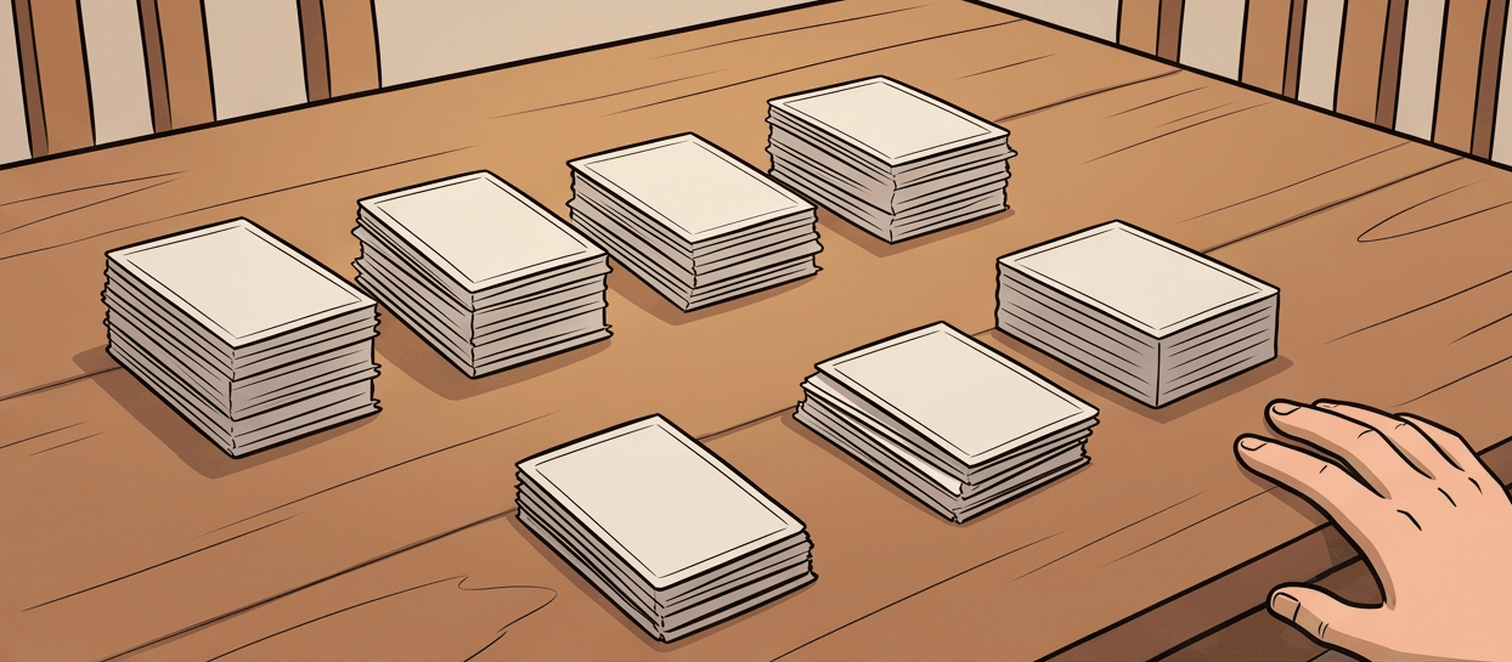
Rough era piles are one of the highest-leverage first steps, because era helps tell you where the exceptions could be hiding. Sports cards go into a pre-overproduction pile and an overproduction-era pile. Pokémon splits into the earliest sets and everything after. Comics split by decade. Magic splits into the earliest sets and everything else.
Most cards carry a copyright year in the small print on the back, and comics carry a cover date. You do not need precision. You need to know roughly which decade each pile belongs to.
What era tells you is where to spend attention. What it does not tell you is value, because scarce material exists in overproduced eras and worthless material exists in old ones. It is a filter, not an answer.
Step 2: What Actually Signals Value in Sports Cards
Now work the piles, starting with the sports cards.
The most common mistake here is assuming that a famous player means a valuable card. It does not. A Hall of Famer printed a million times is still a card printed a million times. Scarcity and demand set the price, and the player is only one input into demand.
What to actually pull out:
Anything genuinely old. Material that predates the overproduction era is where the money concentrates, because far less of it survived.
Rookie cards, with a caveat. A rookie card of a player who became genuinely great is worth checking. A rookie card of a player who was hyped at the time and then did not sustain a career is usually not, no matter what a price guide said in 1991.
Anything unusual in the run. Odd sizes, glossy or premium factory-set variants, promotional inserts, printing errors, and anything that plainly does not match the cards around it. Unusual is a reason to set a card aside and identify it, not proof that it is scarce.
Sealed product. Unopened boxes and packs behave differently from loose cards and are worth setting aside separately rather than opening.
The four sections that follow are the same step applied to the other categories, because the signals are not identical across them.
If You Have Pokémon Cards
The value in old Pokémon collections concentrates hard in the earliest print runs, and there are two specific markers that separate those from everything else.
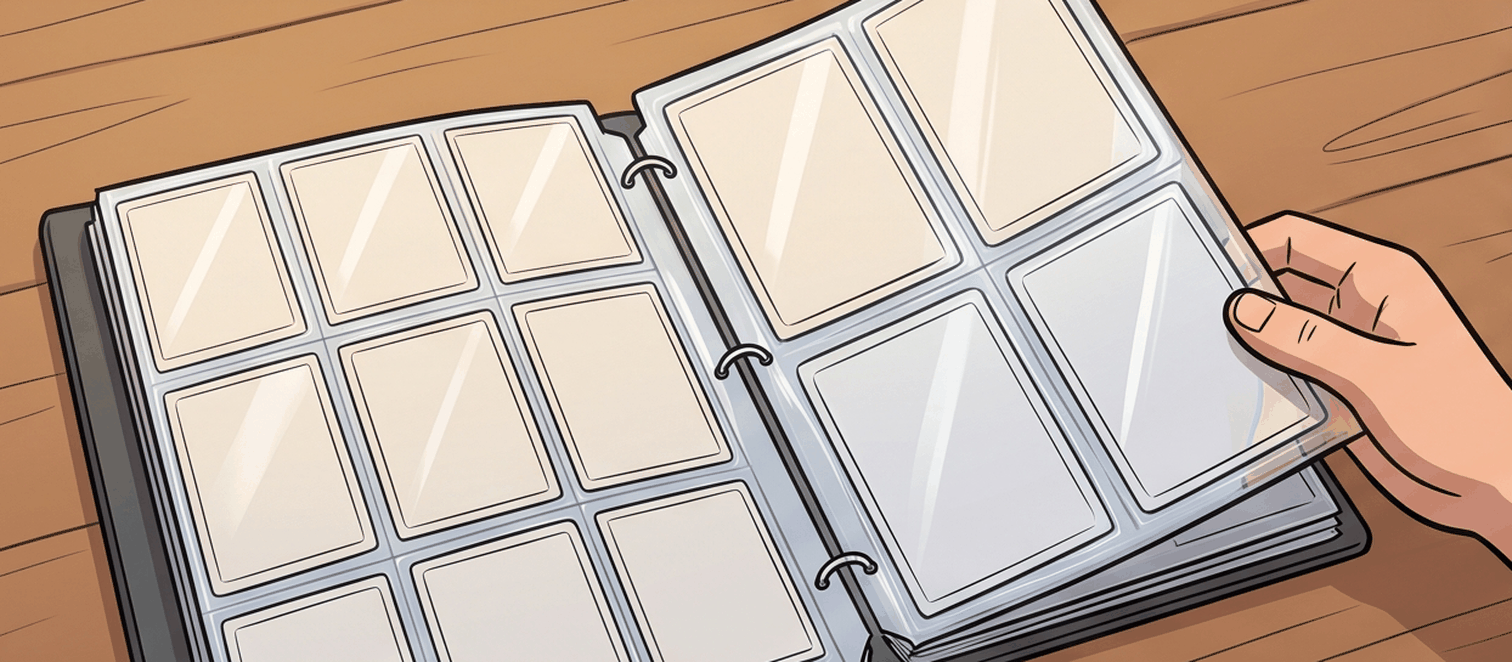
The 1st Edition stamp. A small stamp below the left side of the artwork box. It marks a card as part of that set’s 1st Edition printing, and it appears across a number of early sets rather than only the first one.
Shadowless printing. This one is specific to the original English Base Set. Later Base Set cards carry a drop shadow around the illustration window, giving the picture depth against the yellow border. The earlier print does not have it, so the artwork sits flat. Set two cards side by side and the difference is immediately visible. Note that Trainer and Energy cards have no illustration window, so this check does not apply to them.
The English Base Set went through three print runs in this order: 1st Edition, then Shadowless, then the Unlimited run that most people have. Holo status matters on top of that, meaning the cards that shine when tilted.
A thick binder of later cards is usually bulk, and that is normal. The question is whether anything in it carries those early markers.
If You Have Magic Cards
Magic value concentrates in the earliest sets, which came out in 1993 and 1994. The most reliable tell is something missing rather than something present: the earliest sets carry no expansion symbol beside the artwork at all, because expansion symbols only arrived with later releases. Border colour narrows it further, since the first two printings are black-bordered while the wider printing that followed them is white-bordered.
There is also a structural quirk worth understanding. In 1996 the publisher published a reprint policy creating the Reserved List, a commitment never to reprint the cards on it in functionally identical form. What that means in practice is that the supply of those specific cards cannot increase through new printings the way it can for everything else.
That is a supply constraint, not a promise of value. Plenty of cards on the list are not sought after, and what any individual card is actually worth still comes down to that card and to whether anyone wants it. It is a reason to check carefully, not a reason to assume.
Beyond the early sets, rarity tier matters, and commons are usually bulk with narrow exceptions. Old-border cards and format staples are worth a look. The rest of a large collection generally is not.
If You Have Comics
Comics follow the same overproduction story with different vocabulary and a slightly different timeline.
Key issues are the whole game. First appearances of characters who went on to matter, first issues, and notable one-off events. A complete run of an ordinary title from the overproduction period is usually worth very little, while a single key issue from the same longbox can be worth a great deal.
Condition can materially affect value, because paper is vulnerable in ways cardboard is not. Yellowing, spine stress, creases, and moisture damage all move the answer.
Bags and boards do not make a comic valuable. Everybody bagged and boarded them during the boom, which is precisely why high-grade copies from that period are common rather than scarce.
Watch for printing details. First printings and reprints can look nearly identical from the outside, and the distinction matters on key issues.
Step 3: When Condition Changes the Answer
Condition only matters once scarcity is established, and getting that order backwards wastes enormous amounts of time.

On a card printed by the million, mint condition changes nothing. There are already more pristine copies than buyers. On a genuinely scarce card, condition changes everything, sometimes by an order of magnitude.
So assess condition on the cards you pulled in Step 2, not on the whole collection. What to look at, without the grading jargon:
Corners. Sharp or rounded and soft. This is usually the first thing to go.
Edges. Clean or showing white chipping along the borders, which is most visible on dark-bordered cards.
Surface. Scratches, print defects, gloss loss, and for holos, any scuffing across the shine.
Centering. Whether the borders are even on all four sides. Consistently off-center is a flaw, not a rarity.
Creases. Folds and creases are serious condition defects, they are usually permanent, and they tend to affect value more than surface wear does.
Do not clean anything, do not press anything, and do not try to flatten a bend. Amateur repair is visible to anyone who handles this material and it turns a correctable problem into a permanent one.
Step 4: What Is Not Worth Researching Card by Card
This is the step most valuation guides skip, and it can save more time than almost anything else in the process.
Some material is almost always bulk. Overproduction-era sports commons. Later-era Pokémon that carry none of the early markers. Magic commons from ordinary sets. Complete runs of ordinary comic titles from the boom years.
Do the time math. Looking up four hundred common cards individually might take three hours, and at the end of it you will have discovered that four hundred common cards are common. That is not diligence, it is a bad trade.
Selling bulk as a lot is a legitimate outcome and not a failure. It is priced by volume rather than by card, it converts a storage problem into money and space, and it is what most of most collections is for.
None of this means throw anything out. It means sort it, keep it together, and stop researching it.
Step 5: When Grading Is Worth It, and When It Is Not
Grading is professional authentication and condition assessment, and the card comes back sealed in a labeled holder.
It costs money per card and takes time, and the value it adds only clears that cost on a narrow band of material: cards that are both worth something to begin with and likely to come back with a high grade. Most of what comes out of an old collection fails both tests.
The common error is grading a card because it looks clean. Clean is not scarce. If a card is worth a few dollars raw, a grading fee will not rescue it, and you can end up with a professionally authenticated card worth less than what you paid to authenticate it.
Run the numbers on individual cards before sending anything, and if you are unsure whether a card clears the bar, that is a good question to ask before you spend money rather than after.
What Is Actually Worth Your Time
| What you have | Realistic outcome | Research individually? | Best next step |
|---|---|---|---|
| Overproduction-era sports commons | Bulk value, priced by volume | No | Sort by sport and era, keep together |
| Pre-overproduction sports cards | Genuinely variable, some real value | Yes | Check condition, then comps |
| Sealed sports boxes and packs | Depends heavily on era | Yes | Leave sealed, ask before opening |
| Pokémon with 1st Edition or shadowless markers | Worth checking closely | Yes | Check holo status and condition |
| Later Pokémon with no early markers | Bulk | No | Keep together; consider selling as a lot |
| Early-set black-bordered Magic | Worth checking closely | Yes | Identify the set, then check comps |
| Magic commons and later sets | Bulk, narrow exceptions | Mostly no | Pull format staples, keep the rest together |
| Comic key issues and first appearances | Where the value concentrates | Yes | Assess condition carefully first |
| Ordinary comic runs from the boom years | Very low per issue | No | Keep runs together; consider selling as runs |
When a Local Shop Is the Efficient Next Step
Everything above is doable at a kitchen table, and for a lot of people that is enough. But there is a point where it stops being the efficient use of your time.
Someone who buys and sells this material daily can often identify the promising material far faster than an owner working through it for the first time. They have comparison material on hand, they know what is currently in demand rather than what was in demand in 1994, and they recognize the unusual thing in the stack without needing to work out why it is unusual.
Two honest caveats. A shop is a buyer, and a buyer has its own interests. And an appraisal and an offer are different things. Asking for both is completely normal, and so is walking out to think about it.
Call ahead, because shops specialize. A store built around modern Pokémon is not the right stop for a longbox of 1970s comics, and the offer will reflect that. Describe what you have on the phone before you load the car.
You can find card and comic shops near you in the CollectorsHaul directory, including what each one deals in. If you have decided to take a collection in, our guide on how to prepare your collection before visiting a card shop covers how to get it ready first, and where to sell sports cards, Pokémon cards, and comics locally walks through how shops compare to the other options.
Frequently Asked Questions
Are my old baseball cards worth anything?
Most cards from the overproduction era of roughly the mid-1980s through the mid-1990s carry low individual value because they were printed in enormous quantities and preserved carefully by millions of people. They still have bulk value priced by volume. Older material from before that period, unusual variants, and sealed product are where exceptions concentrate, so sort by era before researching anything individually.
Why are cards from the late 80s and early 90s worth so little?
Supply. Manufacturers dramatically increased production during that period to meet a speculative boom, and buyers stored the cards in excellent condition. Scarcity drives value, and material that is both abundant and well preserved is the opposite of scarce.
Does a Hall of Fame player mean the card is valuable?
Not by itself. The player affects demand, but scarcity sets the ceiling. A great player’s card printed in the millions is still a card printed in the millions. The same player’s card from a genuinely scarce early issue is a different item entirely.
Should I get my old cards graded before selling?
Usually not. Grading costs money per card and only adds enough value to clear that cost on cards that are both already worth something and likely to receive a high grade. Most material from an old collection fails at least one of those tests.
Is it worth selling a collection as bulk?
Often, yes. Bulk is priced by volume rather than by card, and for the large low-value portion of most collections it converts a storage problem into money without costing you hours of research. Pull anything with real signals first, then treat the rest as a lot.
Where can I get a card collection appraised?
Local card and comic shops can be a practical starting point. Policies, specialties, whether appraisal is offered at all, and any fees vary from shop to shop, so call ahead and ask before you load the car. Keep in mind that an appraisal and a purchase offer are different things, and it is reasonable to ask for both.
Before You Spend a Weekend on It
Most of what is in that box is probably bulk, and that is a normal outcome rather than a disappointing one. Sort by era, pull the material that carries real signals, check condition only on what you pulled, and stop researching the rest.
If something in the pile looks like it might matter and you cannot tell, that is the point to put it in front of someone who handles this every day. Find a card or comic shop near you and ask before you decide what to do with any of it.
← Back to Blog