How to Find a Local TCG Community: League Nights, Tournaments, and Draft Pods
You have the cards. You have probably played online. There is a shop fifteen minutes away that runs something on Thursday nights, and you have looked it up more than once, and you have not gone.
The reason is almost never that the events are hard to find. Each of the five games covered here has an official store or event finder run by its publisher, and you can find your nearest listing in about two minutes.
The reason is that you cannot tell what you would be walking into. The listing says “Standard Constructed, 6:30, Swiss” and you do not know whether that means bring a deck, whether people will be annoyed if you are slow, whether you will be the only adult or the only new person, or what happens after you lose.
So this covers both halves. Where the events actually are, which is the quick part. Then what the event names mean, which one fits where you are right now, and what a first night actually looks like from walking in to walking out.
The Events Are Easier to Find Than You Think
All five of the big trading card games run an official store or event finder, operated by the publisher. Those lists are the right place to start, because a store appears on them by signing up to run that game’s sanctioned events, which tells you something a general business listing cannot.
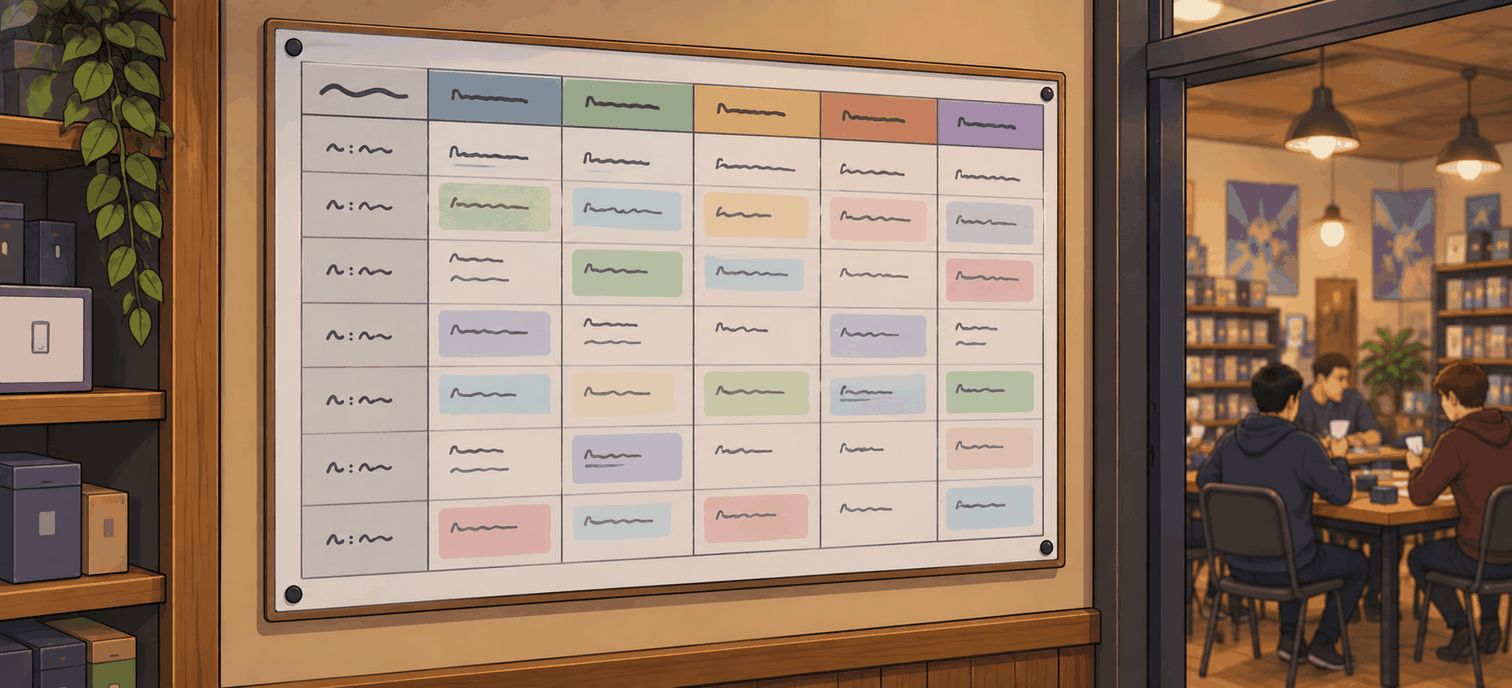
They are not perfect. Konami’s own locator page notes that store and tournament information can change without notice and tells players to contact the store directly. Treat any listing as a strong lead rather than a guarantee, and call ahead before you drive out to confirm the night, the format, and the start time.
That is genuinely the easy half. The rest of this article is the other half.
Start With the Official Locator for Your Game
| Game | What the store designation is called | Where to look | Common local event names |
|---|---|---|---|
| Pokémon TCG | League and sanctioned event locations | The official Event Locator on the Play! Pokémon site | League play, League Challenge, League Cup |
| Magic: The Gathering | WPN, the Wizards Play Network | The official Wizards Store & Event Locator | Friday Night Magic, draft night, Commander night, prerelease |
| Yu-Gi-Oh! | OTS, Official Tournament Store | The OTS locator on the official Yu-Gi-Oh! site | Locals, OTS tournaments, Premiere! and release events |
| One Piece Card Game | Official stores, listed through Bandai | The events section of the official site, and the BANDAI TCG+ platform | Store Tournament, Treasure Cup, Pirates Party, Welcome Event |
| Disney Lorcana | Disney Lorcana Play Network | Store search on the Ravensburger Play Hub | Weekly Play in Draft, Constructed or Sealed, plus Disney Lorcana Challenge |
One thing worth knowing: a single shop can appear on several of these lists at once, running a different game on a different night of the week under a different program name. The Thursday Magic crowd and the Saturday Pokémon crowd may be almost entirely different people in the same room.
What the Event Names Actually Mean
This is the part that stops people, and it is the part nobody explains. You can find twelve events near you and still not know which one to go to, because the names assume you already know.
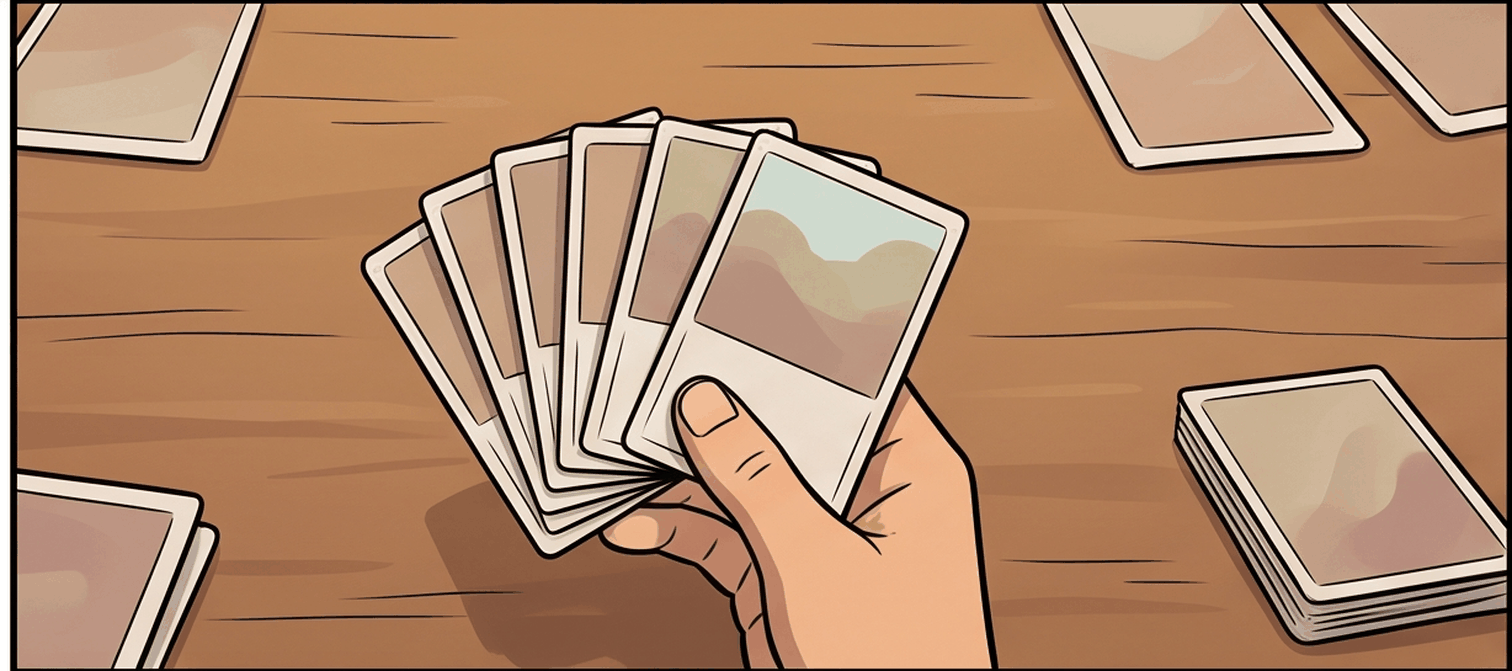
Here is the vocabulary, grouped by what it tells you.
Casual and recurring. Locals is the catch-all term players use for a regular weekly event at a shop, most often in Yu-Gi-Oh! but used loosely everywhere. League play and league night usually mean a recurring session you can drop into, sometimes with a season that tracks points over weeks. Open play or casual play means the tables are available and you find someone to play. Commander night is Magic-specific: a multiplayer format built around a single legendary commander card, usually played four to a table, with games running longer than a one-on-one match.
Structured but still local. League Challenge and League Cup are Pokémon’s tiered local tournaments, more formal than drop-in league play, typically run with age divisions and a set format. OTS tournaments are Yu-Gi-Oh!’s store-run local tournaments. Friday Night Magic is Magic’s long-running weekly event and can be draft, Commander, or a constructed format depending on the shop. Store Tournament and Weekly Play are the One Piece and Lorcana equivalents.
Format words, which matter more than the event name. Constructed means you bring a deck you built. Standard is a constructed format limited to recent sets. Sealed means you open fresh product at the event and build from what you get. Draft means players sit in a group, open packs, and pass cards around, each picking one at a time, then build from what they took.
Draft pods. A pod is just the group of players drafting together at one table. If a listing says “draft pods start at 7,” it means they will seat you with a group, hand everyone packs, and the drafting begins. You do not bring anything.
Prerelease. An event held shortly before a new set goes on general sale, where players open the new cards and build from them on the spot. Every player is using cards nobody has played with yet.
Which Event Should Be Your First?
Rather than ranking these, match them to where you actually are. Five things determine whether an event fits a newcomer: whether you need your own deck, how much rules knowledge is assumed, how the event is structured, how long it commits you to, and how competitive the room tends to be.
| Your situation | Event types that fit | Deck required? | Rules familiarity assumed |
|---|---|---|---|
| No deck, new to the game | Draft, sealed, prerelease, and any event a publisher labels for beginners | No, cards are supplied at the event | Low; these formats assume you are building from scratch that day |
| No deck, know the rules from playing online | Draft, sealed, prerelease | No | Moderate; you know how to play, not the local etiquette |
| Own a deck, never played in person | Casual league night, open play, Commander night | Yes | Low to moderate; no format legality check at the door |
| Own a deck, want real games | League Challenge, OTS tournament, Friday Night Magic, Store Tournament, Weekly Play | Yes, legal in the stated format | Moderate to high |
| Bringing kids | Pokémon league play and League Challenges, which run age divisions | Yes for most events; ask the shop what it provides | Low |
Two practical notes on that table. Limited formats, meaning draft and sealed, are the ones where nobody brings a deck, so the person who has played for ten years and the person who started last week are both building from packs they just opened. That does not make anyone equal at playing, but it removes the collection gap entirely.
And some publishers designate specific beginner events. One Piece runs a Welcome Event aimed at new players. When a publisher explicitly labels something for beginners, that label is theirs, not our guess, and it is worth looking for.
What Actually Happens at a League Night
The shape is similar across games and shops.
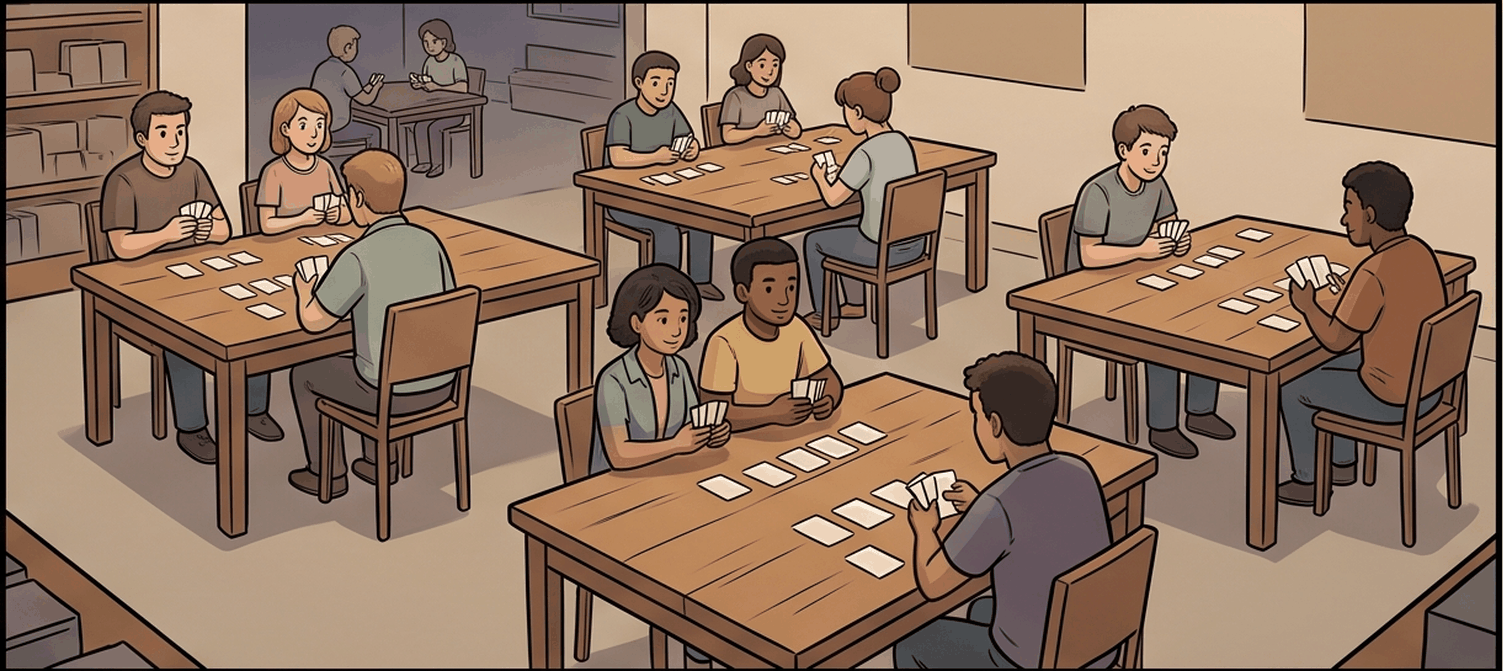
Arrive early. Thirty minutes before the listed start is not too early. Registration can close before the posted start time, so check the cutoff when you look up the event, and arriving early gives you a chance to ask questions while nobody is mid-game.
Sign in and pay. Some events charge an entry fee, and some offer prize support. Both vary by shop and event, so check before registering.
Pairings go up. Many local events use Swiss pairings, which means you play a set number of rounds against opponents with similar records and you play all of them regardless of whether you are winning. Under Swiss you are not knocked out after one loss, which is worth checking in the event listing, because it changes what a bad first game actually costs you.
Rounds run on a clock. Each round has a time limit, posted or announced at the start. Between rounds there is a gap where people talk, trade, look through the singles case, and get food.
The night ends. A weekly event usually takes up an evening rather than an hour. Ask how many rounds are planned if you need to know when you will be done. You are allowed to leave early; tell the organizer so they can adjust the pairings, and that is the whole etiquette.
Worth knowing: the game does the social work for you. You are not walking into a room and trying to make conversation. You are being assigned an opponent, sitting down, and playing a game you both understand. That structure means you do not have to introduce yourself to anyone to start playing.
Losing a game does not end your night. Swiss pairs you against players with similar records and you play the scheduled rounds either way.
What to Bring
Short list.
A deck, if the format needs one. Check the listing. If it says draft, sealed, or prerelease, you do not need one.
Sleeves, if you are bringing a deck. Structured events commonly require cards to be sleeved in identical, opaque-backed sleeves. Check the event’s requirements before you go.
A way to track life or damage. A notepad, a phone app, or dice, depending on the game.
Something to write with. Some events still use paper match slips.
Cash. Some shops have a card minimum, and entry fees are often easier in cash.
Your phone. For checking prices, rules, and your deck list.
If you are not sure whether you need a deck, call the shop and ask which format the event is. That one question answers most of this list.
Ways In That Are Not a Shop
A shop is one answer, and for some readers it is not an available one.
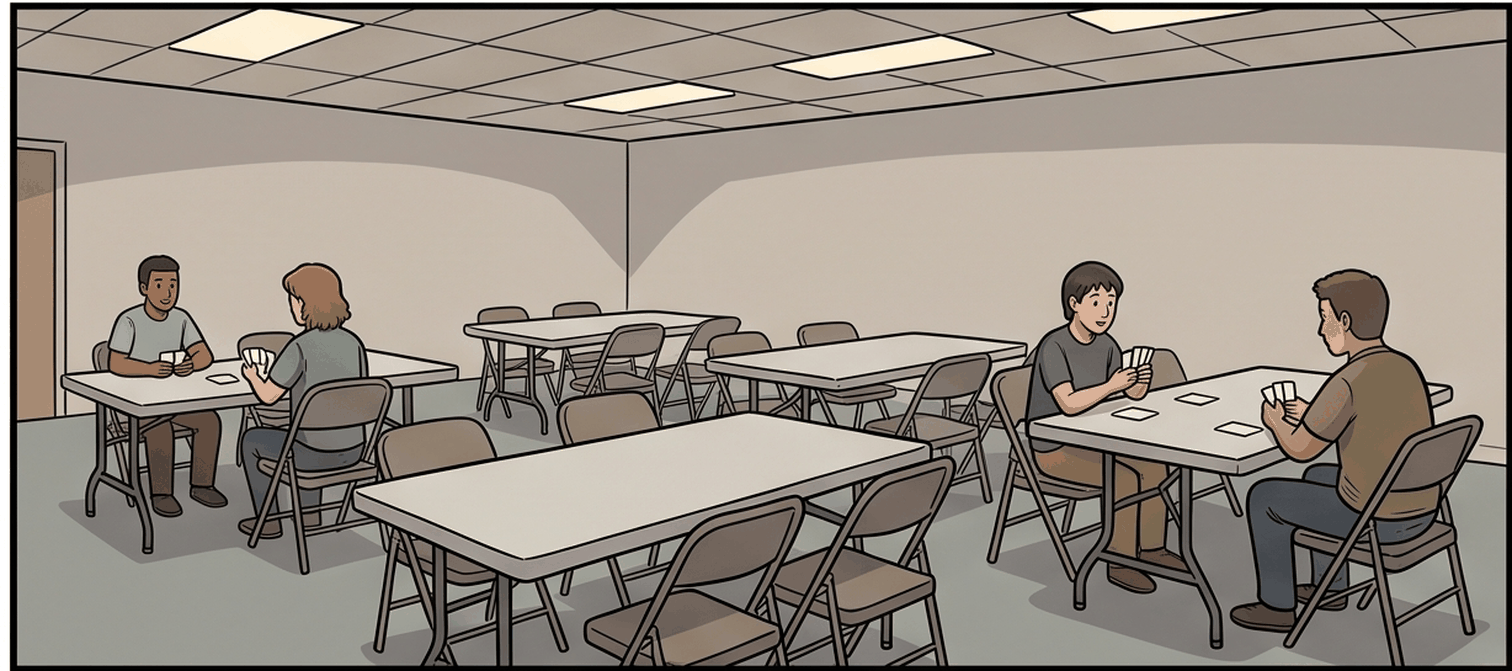
Discord. Shops run servers, and so do regional player groups independent of any shop. A server is where day-to-day coordination happens: pickup games, a spare seat in a draft, schedule changes, and questions you can ask before you show up anywhere. Searching your city plus the game name plus “Discord” is a reasonable way to look for one. Reading a server for a week before you post is a perfectly normal way to start.
Facebook groups. Used for local trading, buying and selling, and event chatter. Useful for a specific thing a locator cannot tell you: whether a shop in your area has an active scene for your game, as opposed to simply having a listing. Ask the group directly.
Libraries and community centers. Some run gaming programs. Where they do, attendance is typically open to the public and does not require buying anything. Worth checking your library’s events calendar even if you would never have thought to look there.
Conventions and card shows. A low-commitment way to get a first exposure. You can watch events happening, talk to people, and leave whenever you want without having committed to a four-hour tournament.
Online play as a bridge. Learning the rules online first removes one of the two barriers before you ever walk in, and leaves you only the social one. It is not a substitute for in-person play but it is a legitimate on-ramp.
If there is no shop within a reasonable drive, these are not consolation prizes. They are the answer.
Why a Shop Is Still Usually the Center
With all of that said, there are specific reasons the shop tends to end up at the middle of a local scene, and they are worth naming honestly rather than assumed.
The schedule is recurring and physical. A Discord can tell you people exist. A shop gives you a room, a time, and tables, every week, whether or not anyone organized it that day.
Sanctioned events connect upward. Publisher-run programs link local events to larger organized play. If you ever want to play at a bigger event, the path generally starts at a store that runs the sanctioned version.
Staff know who plays what. A shop employee can tell you that the Tuesday crowd is mostly newer players and the Saturday crowd is competitive, which is information that exists nowhere online.
The player base accumulates there. Where a shop hosts a regular scene, its server or group tends to be organized around that schedule. Finding the shop is one way to find the online side of the same community.
Worth being straight about one thing: a shop is a business, and event nights exist partly to sell product. Entry fees, singles, and sealed product are how the room stays open. That is not a criticism. It is why the tables are there. If selling is what brought you to a shop in the first place, our guide on where to sell sports cards, Pokémon cards, and comics locally covers how shops compare to the other options.
How to Tell If a Room Is Right for You
Not every room is the right room, and it is worth knowing what you are looking at.
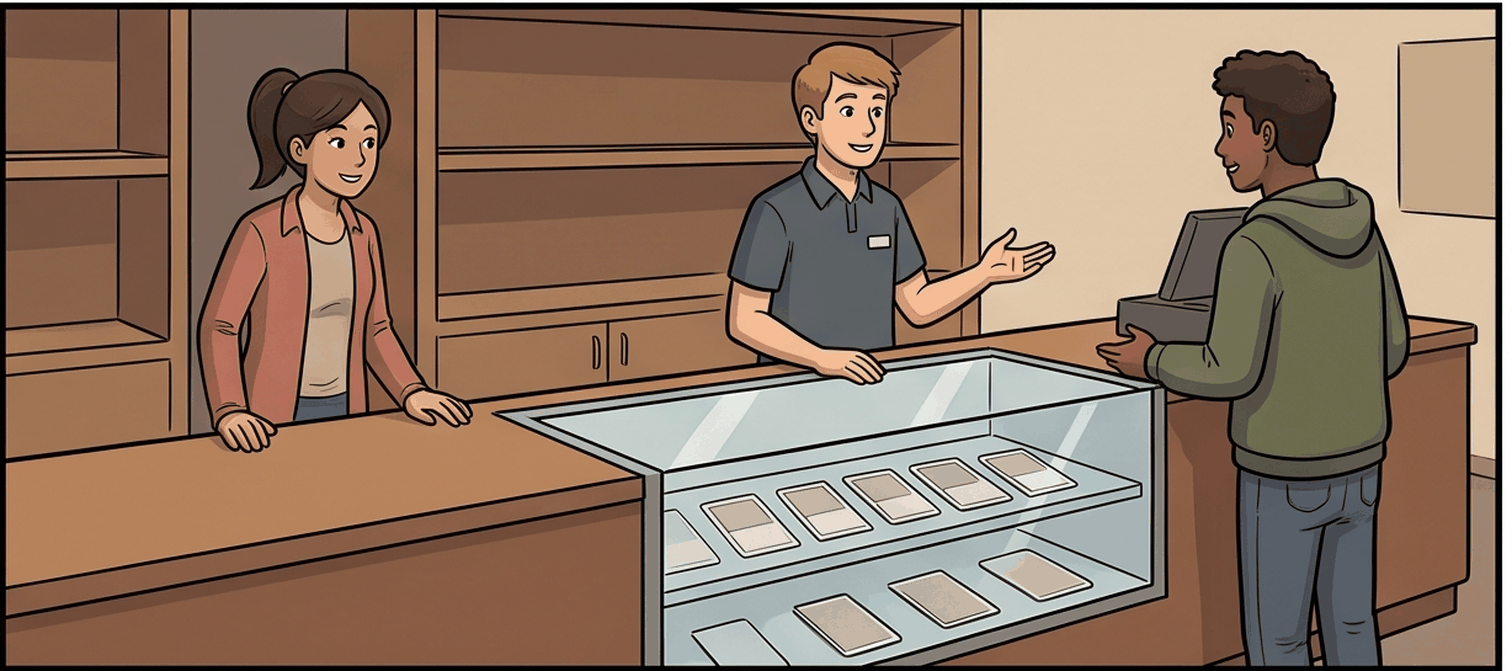
Good signs. A posted schedule you can see from the door. Someone acknowledges you when you walk in. A visible mix of ages and skill levels. Other people who are clearly new. Staff who answer a beginner question without making a face.
Worth noticing. Nobody acknowledges you at all. Rules disputes get loud. The room is obviously one established group and no one else. A shop where the schedule exists online but nothing is posted inside.
If a room is not welcoming, that room is the problem rather than you. Shops have genuinely different cultures, so if another one is within reach, trying it is worth doing. Distance is not the only thing that decides which shop suits you.
Because shops specialize, what a shop actually deals in matters more than how close it is. You can browse the CollectorsHaul directory to see what each shop near you handles, which is useful when a publisher’s locator tells you a store exists but not what kind of place it is. We cover comic shops alongside card shops, which matters if the Thursday Magic night you are looking for happens to be in the back of a comic store.
Frequently Asked Questions
How do I find a local card game tournament near me?
Start with the official locator for your game. Pokémon, Magic, Yu-Gi-Oh!, One Piece, and Lorcana each run a publisher-operated store or event finder listing shops that host their sanctioned events. Listings can be out of date, so call the shop to confirm the night and format before you go.
What are “locals”?
Player shorthand for a regular recurring tournament held at a local shop, rather than a larger regional or championship event. The term is most associated with Yu-Gi-Oh! but gets used loosely across games. Entry requirements, format, and prizes are set by the shop, so check the listing or call ahead.
Do I need my own deck to play at a card shop?
It depends on the format. Draft, sealed, and prerelease events supply the cards at the event, so no deck is needed. Constructed events require a deck legal in the stated format. Check the listing, or call and ask which format the event is.
How much does a league night usually cost?
Entry fees and prize structures vary by shop, game, and event type, so confirm them with the shop before registering.
Is it weird to show up alone?
No. Organized events handle pairing, so you are assigned an opponent rather than having to find someone to play with. Arriving alone does not leave you standing around looking for a game.
What if there is no card shop near me?
Look for a regional Discord or Facebook group, check whether your library or community center runs gaming programs, and watch for conventions and card shows within driving distance. Learning the game online first also means that when you do reach an in-person event, the rules are already familiar.
Just Pick One and Go
The events are findable, the vocabulary is learnable in about ten minutes, and the format tells you almost everything you need to know before you arrive.
Pick an event that matches where you actually are. Show up half an hour early. Tell whoever is running it that you are new. It takes one sentence, and it gives them the chance to explain how the night runs before it starts.
If you are still deciding where to go, find a card or comic shop near you and check what it actually deals in before you drive out.
← Back to Blog